
CNC and Laser Cutting Services in Dubai: Applications for Signage and Branding
CNC and laser cutting are at the heart of precision signage fabrication in Dubai. This guide covers materials, applications, tolerances, and how in-house cutting capabilities affect quality and turnaround.
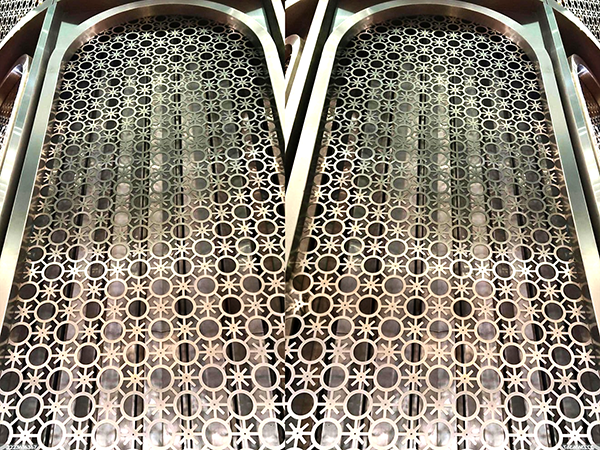
Precision cutting is the foundation of quality signage fabrication. Whether it is a 3D acrylic letter, a decorative metal panel, a custom-shaped sign, or an engraved nameplate, the quality of the cut determines the quality of the finished product.
Sign Design Dubai operates in-house CNC routing and laser cutting equipment at our factory in Dubai Investment Park (DIP 2). This guide explains the difference between the two technologies, what each is best suited for, and how in-house cutting capabilities affect the quality and turnaround of your signage project.
CNC Routing vs. Laser Cutting: What's the Difference?
Both CNC routing and laser cutting are computer-controlled precision cutting processes. The key difference is the cutting mechanism:
CNC Routing uses a spinning router bit (cutting tool) to mechanically remove material. The router follows a computer-generated path to cut shapes, profiles, and pockets.
Laser Cutting uses a focused laser beam to cut or engrave material by melting, burning, or vaporising it. No physical contact with the material.
When to Use CNC Routing
- Thick materials — CNC routing handles materials up to 50mm+ thick; laser cutting is typically limited to 20–25mm
- Aluminium and steel — CNC routing is more cost-effective for cutting metals thicker than 3mm
- Large-format cutting — CNC routers typically have larger work areas than laser cutters
- 3D profiling — CNC routers can cut complex 3D profiles and relief patterns
- ACP and composite panels — CNC routing is the standard for cutting ACP to shape
When to Use Laser Cutting
- Fine detail — laser cutting achieves finer detail and tighter tolerances than CNC routing (kerf width as small as 0.1mm)
- Thin materials — acrylic, thin aluminium, stainless steel up to 3mm, wood, leather, fabric
- Engraving — laser engraving on metal, acrylic, wood, and other materials
- Marking — permanent marking on metal surfaces (serial numbers, logos, barcodes)
- No tooling marks — laser cutting leaves a clean, polished edge on acrylic; CNC routing requires edge polishing
Materials We Cut
Acrylic (PMMA)
The most common material for signage fabrication. Laser cutting produces a polished, flame-finished edge on acrylic — no secondary finishing required. CNC routing is used for thicker acrylic (20mm+) or large-format sheets.
Thicknesses: 2mm–50mm
Applications: 3D letters, sign boxes, display stands, menu holders, nameplates
Aluminium
CNC routing for sheets up to 6mm; laser cutting for sheets up to 3mm. Aluminium is the standard material for sign frames, fascia panels, and structural components.
Thicknesses: 1mm–10mm
Applications: Sign frames, fascia panels, wayfinding signs, road safety signs
Stainless Steel
Laser cutting for sheets up to 3mm. Stainless steel is used for premium signage — reception logos, door signs, decorative panels.
Thicknesses: 0.5mm–3mm
Applications: Reception logos, door signs, decorative panels, nameplates
ACP (Aluminium Composite Panel)
CNC routing is the standard for ACP. The router cuts through the aluminium skins and polyethylene core cleanly.
Standard thickness: 3mm, 4mm, 6mm
Applications: Fascia panels, hoarding, sign boxes, wayfinding panels
Wood and MDF
Both CNC routing and laser cutting. Wood and MDF are used for interior signage, display fixtures, and decorative elements.
Applications: Interior signs, display fixtures, decorative panels, event props
Foam (PVC Foam, Polyurethane)
CNC routing. Foam is used for lightweight 3D letters, display props, and exhibition elements.
Applications: 3D letters, exhibition props, display elements
Laser Engraving and Marking
Beyond cutting, laser technology enables engraving and marking on a wide range of materials:
Laser engraving — removes material to create a recessed design. Used for nameplates, awards, trophies, and decorative panels. Depth and detail are controlled by laser power and speed.
Laser marking — changes the surface colour or texture without removing significant material. Used for permanent marking on stainless steel, aluminium, and anodised surfaces. Common for serial numbers, barcodes, and logos on industrial equipment.
Laser etching — a shallow form of engraving. Used for fine detail work on metal and acrylic.
Tolerances and Quality
Our CNC and laser cutting equipment achieves the following tolerances:
| Process | Positional Accuracy | Kerf Width |
|---|---|---|
| CNC Routing | ±0.1mm | 3–8mm (tool-dependent) |
| Laser Cutting (acrylic) | ±0.05mm | 0.1–0.3mm |
| Laser Cutting (metal) | ±0.1mm | 0.2–0.5mm |
For signage applications, these tolerances are more than sufficient for precise letter spacing, tight-fitting assemblies, and complex shapes.
Why In-House Cutting Matters
Many Dubai signage companies outsource their cutting to third-party fabricators. This adds cost, extends lead times, and reduces quality control.
Sign Design Dubai's in-house CNC and laser cutting capabilities mean:
- Faster turnaround — no waiting for external fabricators
- Tighter quality control — we inspect every cut before it moves to the next stage
- Lower cost — no subcontracting markup
- Flexibility — we can accommodate design changes and urgent orders
Get a quote for CNC or laser cutting or call +971 4 255 0366. We accept DXF, DWG, AI, and PDF files for cutting.
Explore Topics
Written by
Sign Design Dubai Team
Content creator and writer sharing insights and stories.
Found this useful?
Share it with your team or save it for later.