Construction Hoarding and Site Branding in Dubai: A Practical Guide
Construction hoarding in Dubai is a branding opportunity, not just a safety barrier. This guide covers materials, design, DM requirements, and how to maximise your site\'s visibility.
Every construction site in Dubai is surrounded by hoarding — the temporary barriers that protect the public, define the site boundary, and comply with Dubai Municipality regulations. Most developers treat hoarding as a compliance requirement. The smart ones treat it as a branding opportunity.
A well-designed hoarding turns months or years of construction into a continuous brand impression for thousands of passing motorists, pedestrians, and potential buyers or tenants. A poorly designed hoarding — or worse, plain plywood — is a missed opportunity.
This guide covers everything you need to know about construction hoarding and site branding in Dubai.
What Is Construction Hoarding?
Construction hoarding is the temporary enclosure around a building site. In Dubai, it typically consists of:
- Structural framework — steel posts or timber uprights
- Panel material — ACP (Aluminium Composite Panel), plywood, or corrugated metal
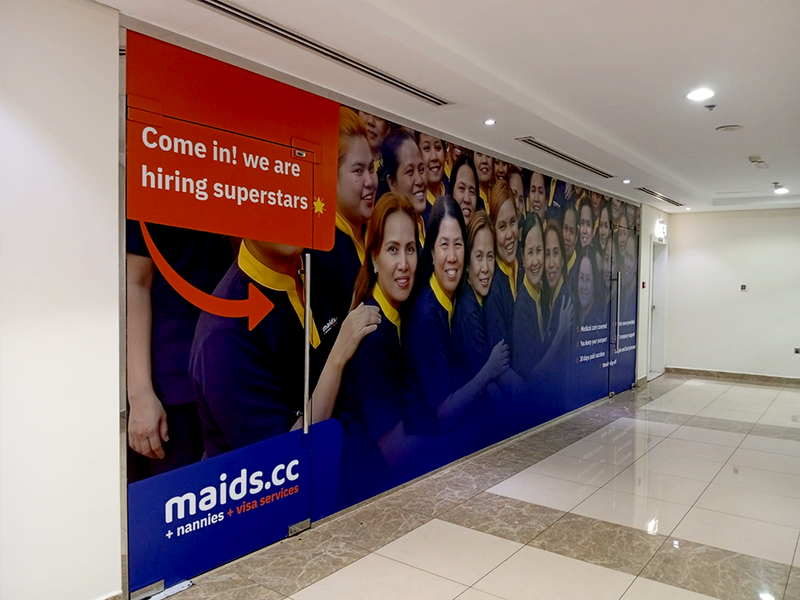
- Graphics — large-format printed vinyl applied to the panels
- Lighting — required for night visibility in many locations
Hoarding serves three purposes: safety (preventing public access to the site), legal compliance (DM requirement), and branding (communicating the project to the public).
Hoarding Materials
ACP (Aluminium Composite Panel) — Recommended
The premium choice for Dubai hoarding. ACP is lightweight, weather-resistant, takes large-format print exceptionally well, and presents a flat, professional surface. It withstands Dubai's UV, heat, and sandstorm conditions better than any alternative.
Cost: Higher upfront, but reusable across multiple projects
Lifespan: 5–10 years with proper maintenance
Best for: High-visibility sites, luxury developments, long-duration projects
Plywood with Vinyl Graphics
Lower upfront cost. Plywood panels with large-format vinyl graphics applied to the surface. Adequate for shorter-duration projects or lower-visibility locations.
Cost: Lower
Lifespan: 1–3 years (plywood degrades in UAE humidity)
Best for: Short-term projects, budget-constrained sites
Corrugated Metal (Zincalume)
The most basic option. Functional but offers limited branding opportunity. Typically used for industrial sites or back-of-site boundaries.
Design Principles for Effective Hoarding
1. Treat It as a Billboard
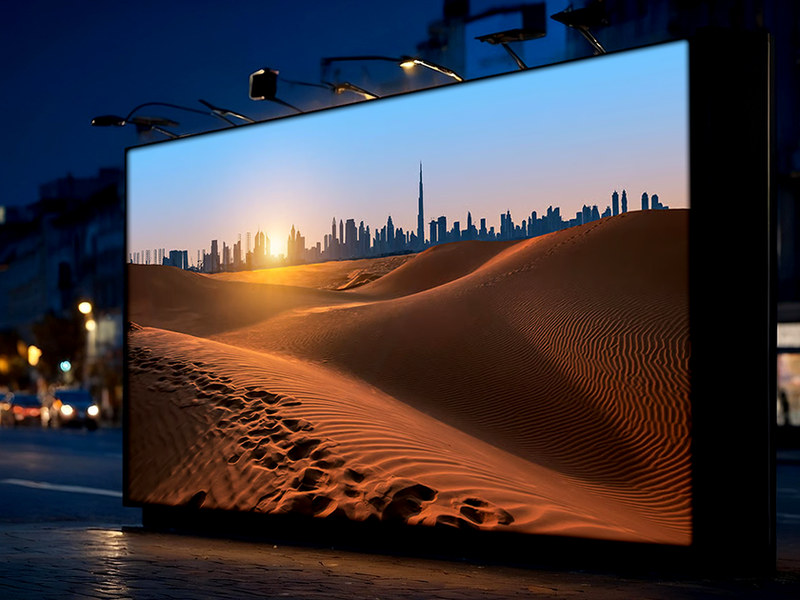
The hoarding is a billboard that runs 24/7 for the duration of your project. Design it with that mindset. Large, bold graphics. Clear hierarchy. A single dominant message.
2. Show the Vision
For residential and commercial developments, the most effective hoarding shows what the completed project will look like — architectural renders, lifestyle imagery, key specifications. This builds anticipation and generates enquiries.
3. Include Contact Information
Every hoarding should include a phone number, website, and QR code. Passing traffic is potential business. Make it easy for interested parties to reach you.
4. Maintain Brand Consistency
If you have multiple sites across Dubai, maintain consistent branding across all hoardings. This builds brand recognition and communicates scale.
5. Plan for Updates
Long-duration projects (18 months+) should plan for hoarding updates — new renders as the project progresses, updated completion dates, new contact information. Design the system so panels can be replaced without replacing the entire hoarding.
Dubai Municipality Requirements
All construction hoarding in Dubai must comply with Dubai Municipality (DM) regulations:
- Permit required before installation
- Minimum height: Typically 2.4m for residential areas; higher for major roads
- Structural requirements: Must withstand wind loads specified by DM
- Lighting: Required for hoardings on major roads (night visibility)
- Maintenance: Owner responsible for keeping hoarding clean and in good repair
- Removal: Must be removed within a specified period after project completion
Sign Design Dubai manages the full DM permit application process. We prepare the required drawings, specifications, and documentation.
Large-Format Printing for Hoarding Graphics
Hoarding graphics are produced by large-format digital printing on vinyl, which is then applied to the panel surface. Key specifications:
- Print resolution: Minimum 72 dpi at final size (hoarding graphics are viewed from distance)
- Material: UV-resistant, anti-fade vinyl — essential for Dubai's UV intensity
- Lamination: Gloss or matt overlaminate for additional UV and scratch protection
- Colour matching: Specify Pantone or RAL for brand colours
For very large hoardings (50m+), graphics are printed in sections and seamed on-site. Our team manages the seaming process to ensure seamless joins.
Cost Guide
| Hoarding Type | Cost per Linear Metre |
|---|---|
| ACP panel with vinyl graphics (2.4m high) | AED 350–AED 700 |
| Plywood with vinyl graphics (2.4m high) | AED 200–AED 450 |
| ACP panel with direct UV print (2.4m high) | AED 450–AED 850 |
| Lighting addition (per metre) | AED 80–AED 200 |
Prices include supply, fabrication, graphics, and installation. DM permit fees are additional.
Example project: 100 linear metres of ACP hoarding with full-colour vinyl graphics, lighting, and DM permit — approximately AED 55,000–AED 90,000.
Project Timeline
| Stage | Duration |
|---|---|
| Design and client approval | 3–7 days |
| DM permit application | 7–21 days |
| Fabrication and printing | 5–10 days |
| Installation | 2–5 days |
| Total | 3–6 weeks |
Get a quote for your construction hoarding or call +971 4 255 0366. We cover all of Dubai and the wider UAE.
Explore Topics
Written by
Sign Design Dubai Team
Content creator and writer sharing insights and stories.
Found this useful?
Share it with your team or save it for later.